How to Reduce Microplastics From Laundry: Practical Tips for Eco-Conscious Washing
Practical guide to reducing microfiber pollution from home laundry with fabric choices, washing techniques, cold water washing, and microfiber filters. Positions WashMaxx's eco-friendly laundry services.
Every time you wash a load of synthetic clothing, you're releasing thousands of tiny plastic fibers into the environment. A single wash load can release several million microfibers, and laundry is the largest source of microplastics into the environment, accounting for 35% of total emissions. The good news: you have real power to reduce this pollution with practical changes to how you do laundry. Whether you're a busy professional trying to minimize your environmental footprint or a family committed to sustainable living, this guide shows you exactly how to reduce microfiber pollution from your laundry routine.
Understanding the Microfiber Problem
Before diving into solutions, it helps to understand what's happening in your washing machine. The biggest source of microfibers is synthetic fabrics, which constantly shed them, and textiles shed microfibers while they are manufactured, worn and disposed of, but especially when they are washed.
The culprit isn't dirt or detergent, it's the mechanical action of washing itself. Every time fabric is laundered, the churning and vibration of the washing machine, combined with the friction from other clothes, causes fibers to dislodge from the fabric and enter the wash water. These fibers are so tiny they slip through standard water treatment plants and end up in rivers, lakes, and oceans.
Not all fabrics shed equally. Acrylic and fleece are the worst offenders, with acrylic shedding rates running roughly 1.5x polyester, and fleece shedding far more than woven synthetics. Even natural fabrics like cotton and wool release microfibers during washing, though synthetic fabrics remain the primary concern.
Step 1: Choose Your Fabrics Wisely
The most effective way to reduce microfiber pollution starts before laundry day, at the store. When shopping for clothing, consider the fabric composition.
Prioritize natural fibers. Cotton, linen, wool, and silk shed far fewer microfibers than synthetic alternatives. If you love the stretch and durability of synthetics, look for blends with high natural fiber content. Polyester cotton blends shed less than pure polyester.
Avoid high-shedding synthetics. Fleece jackets, acrylic sweaters, and soft polyester fabrics look great but create significant pollution. If you already own these items, the next steps become even more important for managing their environmental impact.
Buy durable clothing. Quality matters. Well-made garments last longer, which means fewer replacements and less overall shedding over time. Vintage and secondhand clothing are also excellent choices, they've already shed their initial fibers during earlier washes.
Step 2: Optimize Your Washing Technique
How you wash your clothes matters as much as what you wash. Small changes to your technique can dramatically reduce microfiber release.
Wash in Cold Water
Temperature is one of the most impactful factors you can control. Washing at 30 degrees Celsius instead of 40 degrees reduces microfiber shedding by approximately 30%, according to the NIH. Water in combination with heat weakens the yarn, which leads to more microfiber shedding.
Cold water washing has dual benefits: it reduces microfiber pollution and saves energy. Most modern detergents work effectively in cold water, and your clothes will thank you, cold water is gentler on fabrics and helps preserve colors longer.
Wash Full Loads Only
Only wash full loads of laundry, as washing a full load of fabrics reduces friction leading to less shedding of fibers. Cramming fewer clothes into the machine increases friction between garments, which accelerates fiber breakdown. Patience pays off, wait until you have a full load.
Use Shorter Wash Cycles
The longer your washing machine runs, the more fibers break free from fabric. Wash on shorter cycles, as the longer you wash, the more fibers break, and unless your clothes are covered in mud, a shorter cycle will be just fine.
Most everyday laundry doesn't require a heavy-duty cycle. Quick wash cycles are gentler on fabrics and your environment.
Reduce Spin Speed
Higher spin speeds create more centrifugal force on fabrics, and while high spin is useful for water extraction, it also increases fiber breakage, so reducing spin speed to 800 RPM or lower for synthetic loads can help reduce shedding. Your clothes may come out slightly wetter, but they'll shed far fewer microfibers.
Wash Less Frequently
Wash fabrics less often, as this is the simplest way to reduce microfiber pollution. Air out garments between wears. Spot-clean stains instead of washing entire items. This simple habit cuts microfiber pollution while extending the life of your clothes.
Step 3: Install a Microfiber Filter
If you own your washing machine, installing a microfiber filter is the single most effective action you can take. Filters catch up to 90% of microfibers during every wash, which is by far the most effective solution available today.
Types of Microfiber Filters
External filters are the gold standard. External filters are the gold standard for microfiber capture, installing on the outside of your washing machine, typically on the discharge hose, and filtering all wastewater before it leaves the machine. The Filtrol 160 catches 80 to 90% of microfibers, far more than any in-drum solution.
Laundry bags like the Guppyfriend offer a simpler, no-install option. Independent testing shows Guppyfriend wash bags capture approximately 54% of microfibers shed during a wash cycle, and the bag also reduces fiber shedding in the first place by creating a gentler washing environment for clothes inside it, according to NPS.
Laundry balls like the Cora Ball are affordable and easy to use. While also less effective than the built-in and external filters, they do reduce the amount of fibers released into wastewater somewhat (26-31%).
How to Choose
If you own your washing machine and can invest in a filter, external filters deliver the highest performance. If you rent or prefer a simpler solution, laundry bags are a practical middle ground. Even laundry balls are better than nothing, using a microfiber filter, ball, or bag is better than doing nothing, as it can significantly reduce the volume of fibers released into wastewater.
Tips for Success
Use the Right Detergent
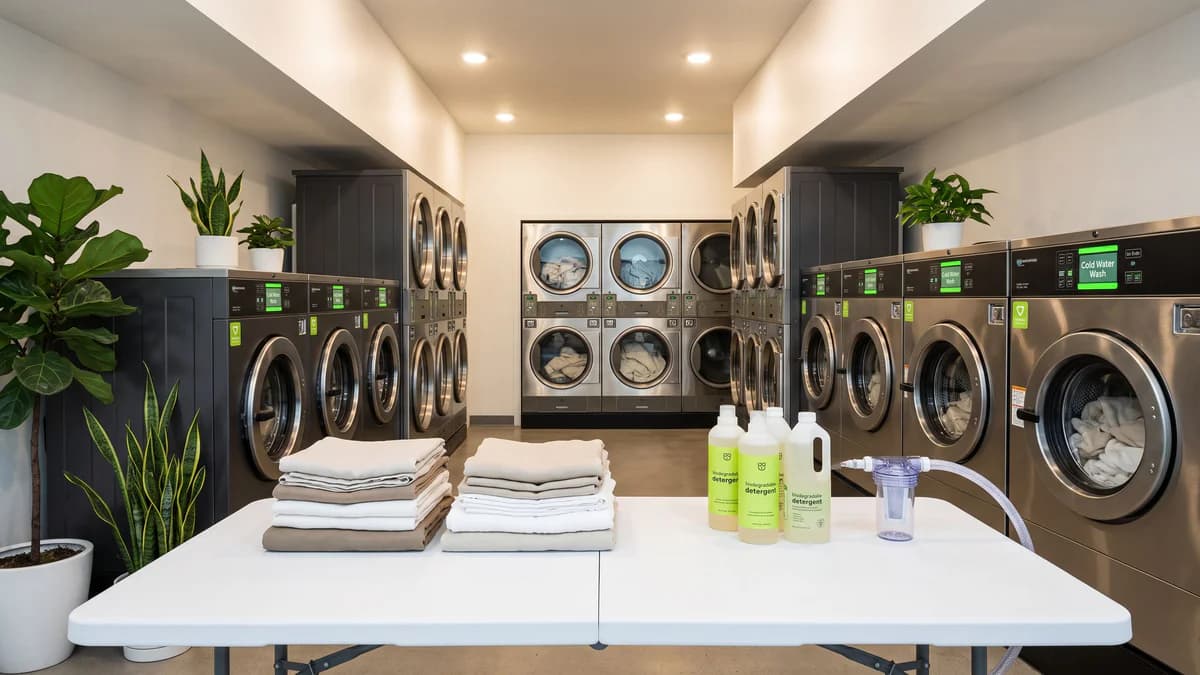
Avoid powder detergents, particularly cleaners with stain removers like bleach or other oxidizing agents. Liquid detergents work better in cold water and are gentler on fabrics. WashMaxx uses eco-friendly, biodegradable detergents in our wash and fold service, reflecting our commitment to sustainable laundry practices.
Dry Smart
Don't forget about dryers. Dryers release airborne microfibers into the air, and a pilot study found that clothes dryers release more microfibers than washing machines, with air from dryer vents typically leading directly to the environment with little filtration, according to Neefusa. Air drying is the most eco-friendly option, but if you use a dryer, clean the lint trap thoroughly.
Make It Routine
Pick one or two techniques that fit your lifestyle and make them habits. Cold water washing takes zero extra effort. Full loads require just a bit of planning. Small, consistent actions compound over time.
Common Mistakes to Avoid
Assuming your washing machine's lint filter catches microfibers. The filters on your washing machine or the water treatment facilities do not catch most microfibers, as they are just too tiny. Standard filters are designed for lint, not microscopic plastic fibers.
Washing everything in hot water. Many people assume hot water is necessary for clean clothes. In reality, cold water works for most loads and dramatically reduces microfiber shedding.
Ignoring fabric composition. You can't change the past, but you can make different choices going forward. Every fleece jacket you don't buy is pollution prevented.
Thinking your efforts don't matter. Individual actions do add up, especially when multiplied across households. Consumers do not need to wait for national policies to take effect; effective steps can be taken in the home today to immediately reduce microfiber pollution.
The Professional Laundry Advantage
For busy professionals, families, and anyone managing high-volume laundry, there's another powerful option: professional laundry services. WashMaxx, a modern Houston washateria with energy-efficient machines and biodegradable detergents, offers eco-conscious alternatives that reduce your household microfiber footprint.
Our wash and fold service uses modern, energy-efficient machines and eco-friendly detergents. We manage water temperature, cycle duration, and load sizes strategically to minimize environmental impact. If you're doing laundry for a family of four or managing work uniforms, outsourcing to a professional service reduces the total number of wash cycles running in your home.
For those with busy schedules, our pickup and delivery service eliminates the laundry burden entirely while supporting sustainable practices. We process multiple loads efficiently, using optimized techniques across three convenient Houston locations (Post Oak, Bissonnet, and Bellerive), all open 7 AM to 10 PM daily.
Our rewards program makes sustainable laundry affordable. Earn 10 points per dollar spent, with 200 points equaling a $2 credit, plus a $5 bonus on new-card signups and birthday rewards. Join our community of eco-conscious Houston residents who value convenience and environmental responsibility.
Conclusion
Reducing microfiber pollution from laundry doesn't require perfection, it requires intention. Start with one or two changes: switch to cold water, wait for full loads, or invest in a microfiber filter. Each action reduces the millions of plastic fibers entering our waterways.
The science is clear: individual choices matter. The most effective strategy remains a layered approach that combines responsible policy with individual action, and while the industry transitions to built-in filter solutions, consumers are empowered to act now by optimizing cycle settings, choosing durable textiles, and installing proven aftermarket filters.
Whether you're managing laundry at home or seeking professional solutions, you have real power to protect our environment. Every wash cycle is an opportunity to choose sustainability.
Ready to make your laundry routine more eco-friendly? Start with cold water washing this week. Looking to eliminate laundry stress while supporting sustainable practices? Visit us today at one of our three Houston locations or explore our pickup and delivery service. Join the WashMaxx community and let us help you do good while getting things clean.
Schedule Your Free CallDeje la ropa sucia con nosotros
Déjela aquí, nosotros nos encargamos.
La lavandería principal de Houston con tres ubicaciones convenientes. Autoservicio, lavado y doblado, o recogida y entrega.
Artículos Relacionados