Medical Linen Laundry in Houston: Questions to Ask Before Choosing a Provider
Learn how to evaluate medical laundry providers in Houston by assessing handling practices, temperature controls, scheduling, capacity, and accountability standards.
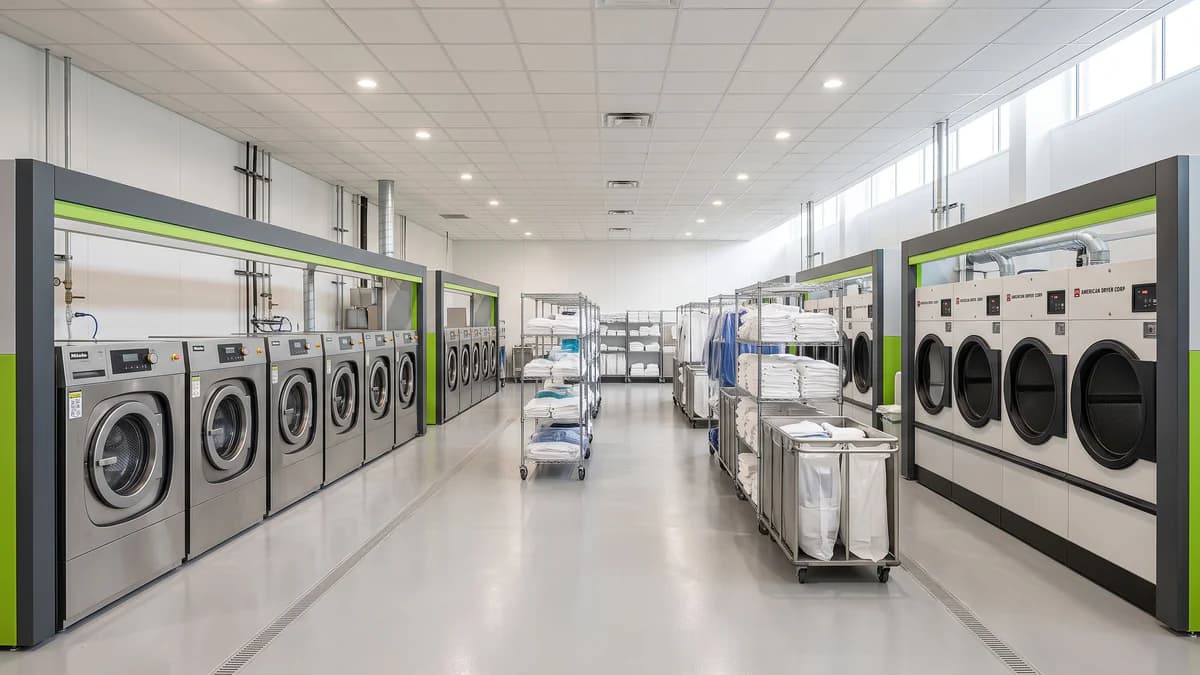
Choosing a medical laundry service Houston provider isn't like selecting a regular laundromat. When hospital linens, clinical textiles, and patient care materials are at stake, the stakes are measured in patient safety, infection control, and regulatory compliance. The right healthcare laundry pickup service becomes an extension of your facility's infection prevention program, while the wrong choice can create vulnerabilities you won't discover until an audit or incident occurs.
This guide walks you through the essential questions to ask before committing to a medical linen cleaning partner, helping you evaluate handling practices, temperature-controlled washing, scheduling reliability, capacity, and accountability without settling for empty compliance claims.
Why Your Choice of Hospital Linen Service Matters
Hospital laundry products literally touch each patient and most staff in every healthcare facility, and because of this, standards have been developed to ensure the linen products provided meet the highest criterion for infection prevention, safety, and comfort. Your facility's reputation, accreditation status, and most importantly, patient safety depend on consistent, high-quality linen processing.
Selecting a hospital linen management provider is a decision that affects infection control, patient safety, clinical operations, and accreditation standing all at once, and evaluating it primarily on cost misses most of what matters. Yet many healthcare administrators struggle with this decision because they don't know what questions to ask or what answers to expect.
Step 1: Verify Certification and Accreditation Standards
Before discussing pricing or service models, ask your potential provider about third-party accreditation. This is non-negotiable.
The Healthcare Laundry Accreditation Council (HLAC) is a nonprofit organization that inspects and accredits laundries that process reusable textiles for hospitals, nursing homes and other healthcare facilities, and accreditation affirms that a laundry organization that processes healthcare linens has successfully passed an inspection of its facility, policies and procedures, training programs, and its relationships with its healthcare customers.
Ask these specific questions:
- Are you HLAC accredited? If so, when was your last inspection, and do you have current documentation?
- Do you hold TRSA Hygienically Clean Healthcare Certification?
- How does your facility design support workflow separation and equipment maintenance, and how do you confirm through documented testing that textiles meet established cleanliness benchmarks?
- Can you provide references from healthcare facilities currently using your service?
Step 2: Evaluate Temperature-Controlled Washing Protocols
Temperature control is foundational to infection prevention. This isn't a preference; it's a science-backed requirement.
A temperature of at least 160°F (71°C) for a minimum of 25 minutes is commonly recommended for hot-water washing, according to the CDC guidelines for laundry in healthcare facilities. Yet many providers cut corners on water temperature to save energy costs, compromising pathogen elimination.
Questions to ask:
- What water temperature does your facility maintain during the wash cycle, and how do you monitor and document this?
- Do you have automated temperature logging systems, or is this monitored manually?
- How do you adjust protocols for different types of contamination (standard soiling vs, according to Hlacnet. visibly contaminated linens)?
- What wash formula factors do you monitor regularly to ensure consistent quality and cleanliness, including water quality and usage, temperature, pH, oxidation, chemical sanitizers, drying/ironing, and equipment performance?
Red flags to watch for:
- Vague answers like "we use hot water" without specific temperature ranges
- No documentation or monitoring systems in place
- One-size-fits-all washing protocols that don't account for contamination levels
Step 3: Assess Handling and Transport Procedures
Cross-contamination can happen anywhere in the chain: during collection, transport, or storage. A strong healthcare laundry service has structured protocols for every step.
Ask about their collection and transport process:
- How are soiled linens collected from patient care areas? Are they placed in designated, color-coded containers or bags?
- What's the timeline between collection and processing? (Delays increase microbial growth risk)
- How are clean and soiled linens kept separate during transport?
- Do you use color-coded bags or carts to distinguish between clean and dirty laundry?
- What happens to linens in transit? Who handles them, and what training have those personnel received?
Step 4: Confirm Scheduling and Capacity for Your Facility's Needs
Service reliability directly impacts your ability to maintain adequate linen inventory and respond to patient care demands.
Critical questions about scheduling:
- What is your delivery schedule and turnaround time to ensure you can meet the hospital's needs for clean linens on a regular basis?
- How do you handle surge demands during census increases or unexpected contamination events?
- What's your backup plan if your primary facility experiences equipment failure or staffing shortages?
- Do you have capacity data from your facility that shows you can handle our peak linen volumes?
- How quickly can you respond to emergency requests for additional linens?
For healthcare laundry pickup services specifically:
- What geographic areas in Houston do you service?
- How frequently can you pick up soiled linens (daily, multiple times daily)?
- Do you offer same-day turnaround for urgent items?
- What's your contingency if a scheduled pickup is missed?
Ask for a detailed service-level agreement (SLA) that specifies turnaround times, delivery windows, and what happens if commitments aren't met.
Step 5: Review Documentation and Accountability Systems
The right provider demonstrates validated hygiene processes, structured collection protocols, genuine capacity to absorb demand surges, meaningful inventory visibility, and compliance documentation that holds up under scrutiny.
Request documentation on:
- Regular internal and external audits (frequency, scope, findings)
- Microbial testing results and how often testing occurs
- Employee training records for bloodborne pathogen protocols and linen handling
- Equipment maintenance logs and calibration records for washers and dryers
- Incident reports and how they're addressed
- Quality control processes and who oversees them
Communication and accountability:
- One of the most common frustrations healthcare facilities experience with laundry providers is poor communication, as delays become harder to resolve when facilities do not know who to contact or when requests move through multiple departments before action is taken, so before signing a contract, organizations should clarify communication protocols, according to OSHA.
- Who is your dedicated account manager, and what's their availability?
- How are service issues reported, and what's the response timeline?
- Will they participate in your facility's infection prevention committee meetings?
Step 6: Understand the Service Model and Handoff Points
Healthcare facilities often choose between on-site processing and off-site central laundries, each with different risk profiles.
If considering off-site processing:
- Off-site processing means the provider's facility handles everything and the hospital carries no infrastructure, while on-premises processing means faster turnaround, no linen leaving the facility, and greater operational visibility for the hospital's own teams, and what matters is that you understand clearly which model is on offer, what the handoff points are, how linen is transported in the off-site model, and who carries responsibility for linen in transit.
- How are linens tracked from pickup to delivery?
- What happens if linens are lost or damaged during transport?
- Are linens from multiple facilities processed together, and how is cross-contamination prevented?
For on-site processing:
- What equipment does the provider install, and who maintains it?
- What training do your staff receive on operating and maintaining the equipment?
- How does the provider ensure your staff follows healthcare laundry protocols?
Step 7: Evaluate Employee Training and Safety Practices
Your provider's employees handle potentially infectious materials daily. Their training level directly impacts service quality and safety.
Ask about employee training:
- Because healthcare textiles are assumed to be contaminated with blood and body fluids, OSHA Standard Precautions must be included as part of a laundry's daily operations, and laundry employees who handle and sort soiled healthcare textiles are considered at risk for any contact with blood-borne pathogens (BBP), which are hazardous because they can be highly infectious and cause serious illness.
- How often do employees receive bloodborne pathogen training?
- What personal protective equipment (PPE) is required for handling soiled linens?
- How do you ensure employees understand the difference between standard and contaminated linen handling?
- What's your employee turnover rate, and how does that affect service consistency?
Common Mistakes Healthcare Facilities Make When Choosing a Provider
Focusing on price over process: The cheapest option rarely delivers the quality your patients deserve. A slightly higher investment in a provider with strong protocols prevents costly compliance violations and patient safety incidents.
Accepting vague compliance claims: Phrases like "we follow all regulations" or "we're HIPAA compliant" are meaningless without specific documentation. Always ask for proof.
Skipping reference checks: Call other healthcare facilities using the provider. Ask about their actual experience with turnaround times, linen quality, and responsiveness to problems.
Neglecting to define handoff points: If linens leave your facility, you need crystal-clear agreements about who's responsible for them at every stage. Ambiguity creates liability.
Not planning for growth: Choose a provider with capacity to grow with your facility. Switching providers mid-contract is expensive and disruptive.
Tips for Success: Building a Strong Partnership
Once you've selected a medical linen service provider, your work isn't finished. Ongoing partnership management ensures sustained quality.
- Schedule quarterly reviews with your provider to discuss performance, challenges, and opportunities for improvement.
- Establish clear KPIs (key performance indicators) such as turnaround time, linen quality scores, and on-time delivery rates.
- Communicate openly about changes to your facility's needs or census patterns.
- Include the provider in your infection prevention committee meetings.
- Document all service issues and resolutions for accreditation purposes.
- Conduct periodic facility tours to verify that protocols are being followed consistently.
Conclusion
Selecting a medical linen laundry provider in Houston is a strategic decision that extends far beyond clean linens. It's about building a partnership with an organization that understands the critical role linen plays in infection prevention and patient safety. By asking the right questions about certifications, temperature-controlled processes, handling protocols, scheduling reliability, documentation, and accountability, you'll identify a provider you can trust.
When considering an in-house or outsourced process, it is essential to ensure either practice can implement and sustain these standards as a regular aspect of their daily operations. Don't settle for providers who can't articulate their processes or prove their compliance. Your patients' safety depends on it.
Ready to find a healthcare laundry partner you can trust? WashMaxx offers commercial laundry services designed for healthcare facilities in Houston, with pickup and delivery options that fit your operational needs. Our team understands the unique demands of medical linen processing and is committed to supporting your infection prevention goals.
Explore Our ServicesDeje la ropa sucia con nosotros
Déjela aquí, nosotros nos encargamos.
La lavandería principal de Houston con tres ubicaciones convenientes. Autoservicio, lavado y doblado, o recogida y entrega.
Artículos Relacionados