What Senior Living Communities Should Look for in a Laundry Pickup and Delivery Partner
Essential checklist for senior living operators: resident-specific sorting, gentle detergents, labeling, scheduling, and consistency standards.
For senior living community operators, laundry is far more than just keeping clothes clean. Understanding what is laundromat-quality service means and how it applies to your facility is crucial for maintaining standards. The quality of a senior home's laundry facilities and services directly impacts its reputation and residents' overall experience. When you partner with the wrong laundry service, you risk resident dissatisfaction, compliance issues, and lost personal items that can damage families' trust in your facility. The right partner, however, becomes an invisible but essential part of your operations, allowing your staff to focus on what matters most: resident care.
Choosing a laundry pickup and delivery partner for your senior living community requires more than just comparing prices. You need a provider who understands the unique demands of healthcare environments, respects residents' belongings, and meets strict regulatory standards. This guide walks you through the critical factors to evaluate when selecting a commercial laundry partner.
Why Senior Living Laundry Service Matters
Not having proper laundry practices can lead to poor hygiene, increased infection risk, decreased safety, and poorer mental health. Many residents in assisted living, memory care, or nursing homes won't be able to reliably perform these tasks on their own, so facilities must offer services to fill the gaps.
Laundry is important because it eliminates germs, and thus, reduces the spread of illness and skin problems, as documented by the CDC. It's absolutely essential for good health. Beyond hygiene, professional laundry services free up staff time and reduce the physical burden on employees who might otherwise handle heavy hampers and time-consuming washing cycles.
Resident-Specific Sorting and Labeling
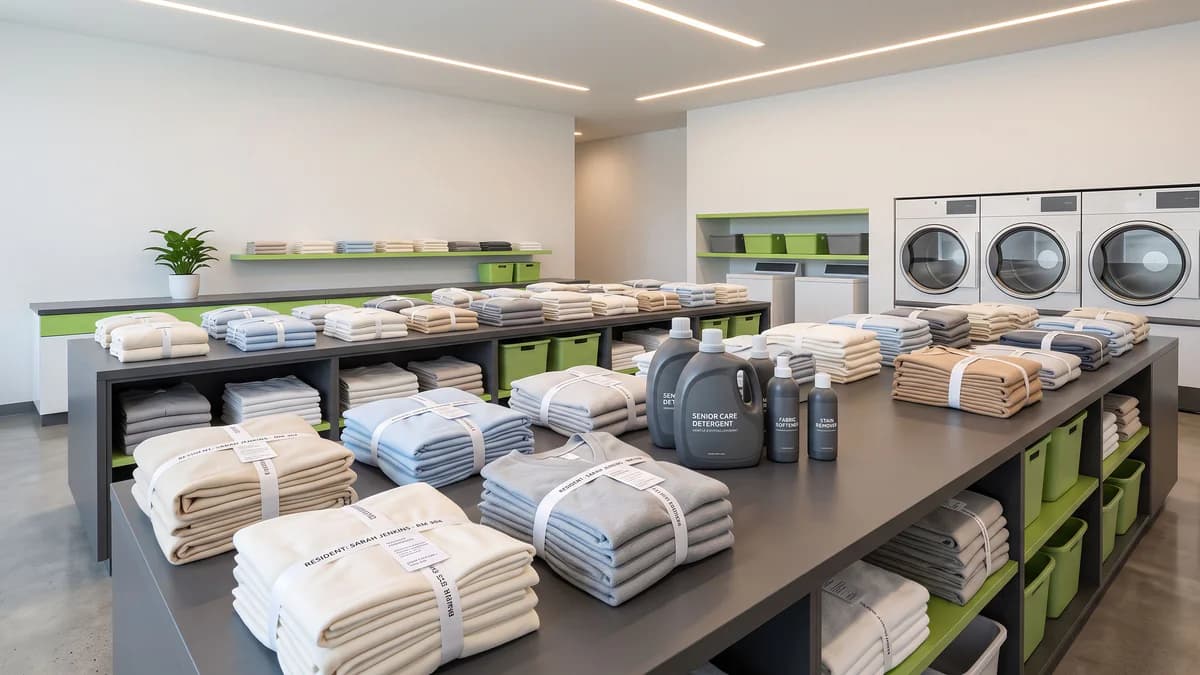
One of the most critical services your laundry partner should provide is meticulous resident-specific sorting and labeling. When residents move into your community, they bring personal clothing that holds sentimental value. Losing or mixing up a resident's favorite sweater or clothing items can cause genuine emotional distress.
Everything should be tracked, separated, and labeled by room or resident, eliminating confusion and preventing lost items. A reliable partner will implement systems that keep each resident's items completely separate throughout the entire process, from pickup through delivery.
Look for a service that offers:
- Color-coded or numbered systems for resident identification
- Detailed inventory tracking for each pickup and delivery
- Barcode or RFID systems for high-volume operations
- Written documentation of what's picked up and returned
- Procedures for handling items that arrive damaged or stained
Design your sorting area to keep clean and soiled streams physically separate, with clear signage and color-coded hampers. Ask your potential partner how they maintain this separation and what safeguards prevent cross-contamination.
Gentle Detergents and Fabric Care
Seniors often have sensitive skin and specific clothing preferences. Many residents in your community may have dermatological conditions, allergies, or preferences for particular detergent types. A quality laundry partner should be flexible and responsive to these needs.
When evaluating a service, ask about:
- Hypoallergenic and gentle detergent options
- Ability to accommodate resident-specific requests (fragrance-free, dye-free, etc.)
- Training for handling delicate fabrics and specialty items
- Methods for protecting items prone to fading or shrinkage
- Processes for communicating special care instructions
Caregivers should be trained to handle laundry with the utmost care, using appropriate detergents and methods suitable for sensitive skin, which is common among seniors. Request information about staff training and whether the service can accommodate residents with severe allergies or skin conditions. For residents with very sensitive skin or complex needs, discuss whether the provider can work with specialized detergents you supply.
Compliance and Health Standards
Senior living facilities operate under strict regulatory requirements. Laundry services are thoroughly regulated. The CDC offers guidelines on assisted living laundry practices to maximize safety and cleanliness. Your laundry partner must understand and comply with these standards.
Key compliance questions to ask:
- Do they follow CDC guidelines for sanitization and thermal disinfection?
- What temperature and duration do they use for washing (CDC recommends 160°F for 25 minutes)?
- Can they provide documentation of compliance audits?
- Do they maintain proper personal protective equipment (PPE) protocols for staff?
- What infection control procedures are in place?
Run scheduled laundry compliance audits covering route separation, PPE adherence, equipment calibration, time, temperature logs, chemical dosing, and environmental hygiene. Request that your partner provide regular audit reports and be prepared to discuss their processes during state inspections. A professional service will welcome these conversations and have documentation ready.
Consistent Scheduling and Reliability
When linens pile up, or personal items go missing, it disrupts resident satisfaction and adds unnecessary stress for your team. Flexible scheduling, on-time pickups, and prompt turnarounds allow your staff to focus on resident care, not laundry logistics. A reliable laundry service partner ensures your operations run smoothly.
Evaluate scheduling reliability by:
- Asking about their on-time pickup and delivery rates (request specific percentages)
- Understanding their turnaround time for standard loads
- Clarifying whether they offer flexible scheduling options
- Asking how they handle peak seasons or unexpected volume increases
- Requesting references from other senior living facilities they serve
- Checking online reviews for complaints about late pickups or missed deliveries
Load turnaround time should be measured from receiving laundry to finalizing the order for pickup or delivery. Establish clear service level agreements that specify pickup days, delivery windows, and turnaround expectations. A partner that consistently meets these commitments reduces operational friction and keeps your residents and staff satisfied.
Damage Prevention and Accountability
Accidents happen, but a quality service takes responsibility seriously. When items are damaged, lost, or returned stained, your residents and their families expect accountability and resolution.
Ask potential partners about:
- Their damage claim process and response time
- Whether they carry liability insurance
- How they handle items lost or misplaced
- Their process for addressing stains that won't come out
- Whether they offer replacement or compensation options
- How often damage occurs (request their damage rate metrics)
Tracking customer complaints about damaged linens, poor or slow service, and low-quality washes can identify the size of the problem and the impact it may have on your bottom line. Request data on their damage rates and ask how they've improved these metrics over time. A professional service will have systems in place to minimize damage and clear procedures for handling the rare incidents that do occur.
Staff Training and Consistency
The quality of a laundry service depends heavily on the people performing the work. Consistent, well-trained teams make nursing home laundry procedures predictable and safe.
When evaluating a partner, ask about:
- Staff training programs and certification requirements
- How often they conduct skills assessments
- Whether they have dedicated teams assigned to your facility
- Staff turnover rates and retention practices
- How they handle cross-training and coverage during absences
- Procedures for addressing quality issues with specific team members
A service that invests in training and maintains stable staffing will deliver more consistent results. High turnover often correlates with quality problems and mistakes.
Technology and Tracking Systems
Modern laundry services use technology to enhance transparency and accountability. These systems benefit both the service provider and your facility.
Look for partners offering:
- Real-time tracking of pickups and deliveries
- Digital inventory management systems
- Photo documentation of items at pickup
- Online portals where staff can view service details
- Automated alerts for schedule changes or delays
- Detailed reporting on laundry volumes and turnaround times
Technology doesn't replace good service, but it provides visibility and accountability. Services that embrace tracking systems demonstrate confidence in their quality and commitment to transparency.
Flexibility for Special Circumstances
Senior living communities face unique situations that require flexible, responsive service. A good partner anticipates these needs and adapts accordingly.
Important flexibility factors include:
- Ability to handle rush cleanings or emergency loads
- Willingness to accommodate resident-specific requests (hand-washing certain items, special folding, etc.)
- Processes for handling items with stains that require special treatment
- Ability to scale service up or down seasonally
- Communication protocols for addressing issues quickly
- Willingness to work with your facility's unique operational needs
Ask potential partners how they've handled unusual requests or challenges for other senior living clients. Their answers will reveal whether they're truly committed to serving your community or just processing volume.
Cost Transparency and Value
While cost shouldn't be your only consideration, it matters. A quality service delivers value that justifies the investment.
When comparing costs, understand:
- What's included in the base price (sorting, folding, delivery, etc.)
- Whether there are volume discounts for larger facilities
- How they handle rush or emergency services
- Whether pricing is fixed or variable
- What happens if your laundry volume increases
- Whether they offer tiered service levels
Commercial-grade detergents and sanitization to meet health standards required in care settings are non-negotiable, even if they cost more. Don't sacrifice quality to save a few dollars per load. The cost of a single lost item or a compliance violation will far exceed any savings from choosing a cheaper service. For information on assisted living facility regulations, consult Washington State's administrative code.
Building a Partnership, Not Just a Transaction
The best laundry services view your facility as a partner, not just another customer. Look for providers who:
- Assign a dedicated account manager
- Conduct regular service reviews and solicit feedback
- Proactively suggest improvements to their service
- Respond quickly to concerns or complaints
- Understand your facility's mission and values
- Invest in your success, not just their revenue
Your Senior Living Laundry Service Checklist
Use this checklist when evaluating potential laundry partners:
- Sorting & Labeling: Resident-specific separation with clear tracking systems
- Detergent Options: Gentle, hypoallergenic choices available
- Compliance: CDC guidelines, thermal disinfection, documentation
- Scheduling: Reliable, on-time pickups and deliveries with flexible options
- Damage Prevention: Clear accountability, insurance, and claim procedures
- Staff Training: Dedicated, well-trained teams with low turnover
- Technology: Tracking systems and transparency tools
- Flexibility: Willingness to accommodate special requests and unique needs
- Cost Value: Transparent pricing with quality that justifies investment
- Partnership Approach: Dedicated account management and proactive service
Taking the Next Step
Choosing the right laundry partner is a significant decision that affects your residents, staff, and operations daily. Take time to interview multiple providers, check references, and observe their processes. Ask to see their facilities and meet the team that will handle your community's laundry.
In the Houston area, senior living communities need partners who understand the unique demands of your operations. WashMaxx offers commercial laundry services designed specifically for senior living facilities, with flexible pickup and delivery schedules, gentle handling protocols, and compliance-focused procedures. Our team understands that when you outsource laundry, you're trusting us with residents' personal belongings and your facility's reputation.
Whether you're currently evaluating your laundry service or planning to change providers, use this checklist to ensure you're partnering with a service that truly supports your mission of excellent resident care.
Ready to explore a laundry partner that prioritizes your residents' needs and your facility's peace of mind?
Get in Touch TodayReady to skip the laundry
Drop it off, we’ll handle it.
Houston’s premier washateria with three convenient locations. Self-service, wash & fold, or pickup & delivery.
Related Articles