How to Remove Stains from White Clothes: Complete Guide to Pre-Treatment & Washing
Learn proven methods to remove stains from white clothes before they set. Master pre-treatment techniques, water temperature selection, and detergent choices to keep your whites bright and stain-free.

Stains on white clothes feel like a laundry emergency—especially when you're already busy juggling work, family, and everything in between. The good news? The less time a stain has to soak in, the easier it will be to remove, and with the right techniques, even stubborn marks can disappear. Whether you're dealing with wine spills, sweat marks, grass stains, or mysterious spots, this complete guide will show you exactly how to remove stains from white clothes before they become permanent.
Why White Clothes Show Stains More Easily
White clothes are wardrobe staples for busy professionals, families, and students in Houston—they're versatile, easy to style, and look crisp when clean. But they're also unforgiving. Unlike darker fabrics that hide marks, white clothes display every splash, smudge, and spill. This visibility means you need to act quickly and use the right approach.
Houston's climate adds another challenge. Yellow stains can happen because of dyes in food, sweat, hard water and chlorine bleach, and with our humid subtropical climate and hard water conditions, keeping whites truly white requires understanding both the stain type and the best removal method.
What You'll Need
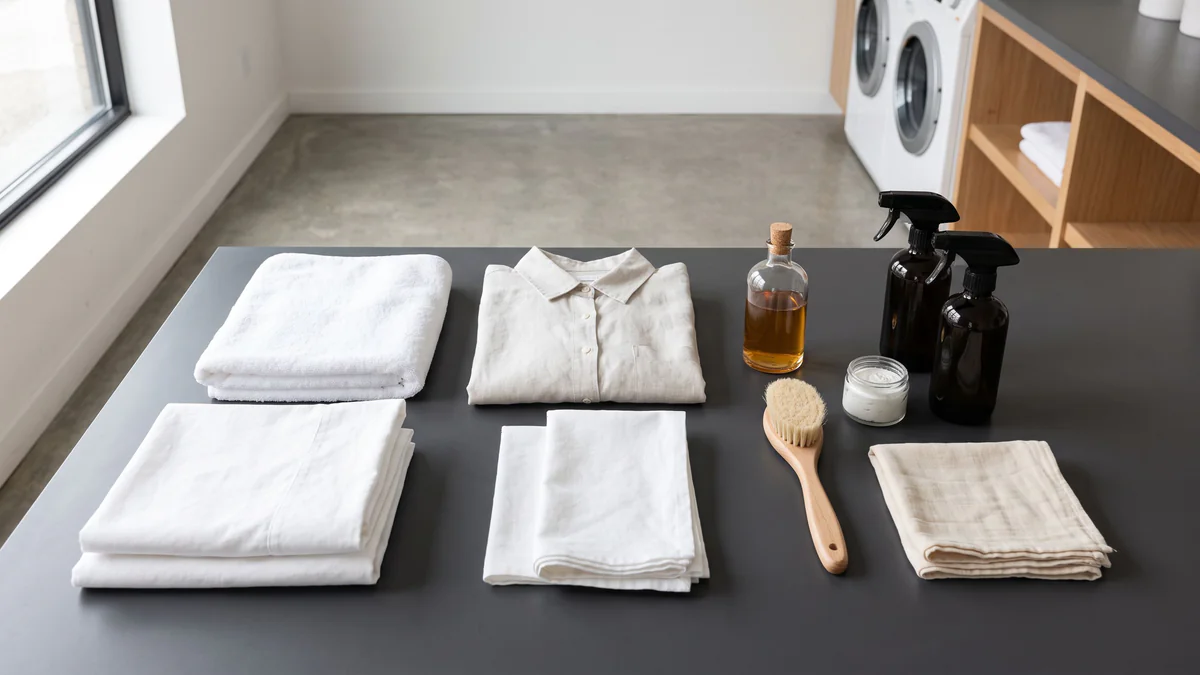
Before tackling a stain, gather these essential supplies:
- Enzyme-based detergent (your most powerful tool for protein stains)
- Oxygen bleach (safer for delicate whites than chlorine bleach)
- Baking soda (a gentle, natural abrasive)
- White vinegar (for yellow stains and odor removal)
- Hydrogen peroxide (3% solution for brightening)
- Dish soap (for grease and oil stains)
- Cold water (your first line of defense)
- Clean white cloths or paper towels (for blotting)
- Soft-bristled brush or old toothbrush (for gentle scrubbing)
Having these items on hand means you're prepared for almost any stain situation—and you won't need to rush to the store when disaster strikes.
Step 1: Act Fast and Assess the Stain
The sooner you treat most stains, the easier it will be to get them out just by machine washing with the right bleach product. Getting to a stain right away usually means less work.
What to do immediately:
-
Remove excess material - If it's a solid stain (mud, chocolate, food), gently scrape it off with a spoon or dull knife. Avoid rubbing, which pushes the stain deeper into fibers.
-
Blot, don't rub - Gently blot the stain with a clean cloth or paper towel. Blotting absorbs the stain without spreading it further into the fabric. Rubbing can push the stain deeper and damage the fibres.
-
Flush with cold water - Hold the stained area under cold running water immediately, according to Maytag. Cold water helps loosen the stain without setting it deeper. Work from the back of the fabric to push the stain outward, not deeper into the weave.
-
Identify the stain type - Is it protein-based (blood, sweat, egg)? Oil-based (grease, makeup)? Or food/beverage-based (wine, coffee, mud)? The type determines your next move.
Step 2: Pre-Treat with the Right Product
Pre-treatment is where the real magic happens. Pre-treat with a stain remover, then let it soak in. Launder according to the fabric care instructions.
For Protein-Based Stains (Blood, Sweat, Grass, Egg)
Studies show that enzyme-based detergents remove protein stains more thoroughly, even in cold water, according to Cocolaundry. This is because proteases break down peptide bonds in proteins, converting stains like sweat, blood, and dairy into water-soluble amino acids.
How to apply:
- Apply enzyme-based detergent directly to the damp stain
- Gently work it in with a soft brush or your fingers using an up-and-down motion
- Soak for at least 30 minutes or several hours for aged stains
- Rinse thoroughly with cold water before washing
For Oil and Grease Stains (Cooking Oil, Butter, Makeup)
Dish soap is a great hack for pre-treating stains on white clothes because it has properties that break down and lift stains from fabric fibers.
How to apply:
- Apply undiluted dish soap directly to the dry stain
- Gently rub it in with a soft cloth
- Let it sit for 5-10 minutes
- Rinse with warm water and inspect before washing
For Food and Beverage Stains (Wine, Coffee, Mud, Chocolate)
Scraping off excess food, blotting the fabric (instead of scrubbing), soaking and pretreating are all helpful when trying to get stains out of white clothes.
How to apply:
- Flush the stain with cold water
- Apply enzyme detergent or a paste of baking soda and water
- Let it sit for 15-30 minutes
- Gently scrub with a soft brush if needed
- Rinse thoroughly with cold water
For Yellow Stains (Sweat, Age)
Baking soda acts as a gentle abrasive, while hydrogen peroxide is a mild bleach with natural whitening power.
How to apply:
- Mix ½ cup baking soda with 1 tablespoon of salt and 1 tablespoon of hydrogen peroxide to form a paste
- Apply directly to the yellow stain
- Let the paste sit on the stain for about 15-30 minutes, according to Cleaninginstitute. This gives the mixture time to break down and lift the stain
- Gently scrub with a soft brush
- Rinse with cold water
Step 3: Choose the Right Water Temperature for Washing
Water temperature is critical for white clothes stain removal—and it's not always what you might think.
Cold Water: Your Safe Choice
When faced with a mystery stain, it is best to treat it with cold water rather than hot water. This is because cold water is less likely to set the stain permanently or spread it further. Use cold water for most food, beverage, blood, or water-based paint stains.
Warm Water: The Balanced Approach
Warm water, typically between 30°C and 40°C, offers a middle ground between hot and cold water temperatures. It provides a balance of cleaning power and fabric care, making it suitable for a wide range of fabrics and stains. Warm water is ideal for pre-treated stains on whites and works well with enzyme detergents.
Hot Water: For Whites Only
Hot water breaks down tough stains, boosts detergent cleaning power, and eliminates bacteria and odors. Also, white clothes are less likely to bleed or fade, making them safe to wash with hot water. Use hot water (the warmest temperature safe for your fabric's care label) for heavily soiled whites after pre-treatment.
Water temperature by stain type:
- Protein stains (blood, sweat, grass): Start with cold water for pre-treatment, then warm or hot for washing
- Oil stains (grease, butter, makeup): Warm to hot water after pre-treatment
- Food/beverage stains (wine, coffee, mud): Cold water for initial treatment, then warm for washing
- Yellow/aged stains: Warm to hot water after pre-treatment with baking soda or oxygen bleach
Step 4: Select the Best Detergent for White Stains
Not all detergents are created equal when it comes to stain removal.
Enzyme-Based Detergents (The MVP)
Enzymatic detergents help break down stains and dirt by boosting chemical reactions. In laundry products, enzymes are specially selected natural proteins that target specific types of stains by breaking down complex molecules into smaller, water-soluble pieces that can be easily rinsed away. Unlike harsh chemicals that simply dissolve stains (often along with fabric fibers), enzymes work precisely and efficiently on particular stain molecules. This selective action is what makes enzymatic cleaners both effective and gentle.
Different enzyme types target different stains:
- Proteases: Break down protein stains (blood, sweat, dairy)
- Amylases: Break down starch stains (pasta, rice, bread)
- Lipases: Break down grease and oil stains
Oxygen Bleach (The Gentle Alternative)
Oxygen-based bleach has a different molecule structure that typically allows it to break down organic stains, like sweat. This method may take longer, as clothes have to soak in a solution of oxygen bleach before washing like normal. Oxygen bleach is safer for white fabrics than chlorine bleach and won't damage delicate whites.
Chlorine Bleach (Use with Caution)
For sturdy fabrics and especially tough stains, you can consider using chlorine bleach if allowed on your garment's care tag. Only use chlorine bleach on sturdy white fabrics like cotton that explicitly allow it.
Tips for Success
Check the care label first. Before applying any stain remover, check your garment's care instructions. Different fabrics require different approaches.
Test on a hidden area. Apply your stain removal solution to an inconspicuous area first to ensure it won't damage or discolor the fabric.
Never put stained clothes in the dryer. Heat sets stains permanently. Always inspect the stain before drying—if it's still visible, repeat the treatment.
Avoid mixing chemicals. Never use vinegar with hydrogen peroxide or bleach, as it can be dangerous. Always use one treatment at a time and rinse thoroughly between applications.
Separate whites from colors. Wash stain-treated whites separately to prevent color bleeding from other garments.
For delicate white fabrics, like silk, linen, or those with spandex, skip enzyme detergents and use a mild, gentle approach. Consider professional dry cleaning for valuable pieces.
Common Mistakes to Avoid
Using hot water immediately. This is the #1 mistake. Using hot water can potentially "bake in" stains by causing molecules to coagulate and bond with the fibers of the fabric.
Rubbing the stain. Rubbing spreads stains deeper into fabric fibers. Always blot gently instead.
Waiting too long. The longer a stain sits, the harder it becomes to remove. Fresh stains are exponentially easier to treat.
Using the wrong product. A grease stain needs different treatment than a protein stain. Identify your stain type before treating.
Skipping the soak. Many stains require soaking time to break down. Don't rush this step—patience yields better results.
Drying before confirming removal. Once you dry a stained garment, the stain is likely permanent. Always verify complete stain removal before the dryer.
When to Seek Professional Help
Some stains are beyond DIY treatment, especially on valuable or delicate items. If you've tried multiple pre-treatment methods and the stain remains, or if your garment is silk, wool, or has special finishes, professional dry cleaning is your best option. WashMaxx's professional cleaning services can handle stubborn stains that home treatment won't touch—and we'll restore your whites without the stress.
For busy professionals and families in Houston who value convenience, our pickup and delivery service means you don't even have to leave your home. Simply schedule a pickup, and we'll handle the rest.
Conclusion
Removing stains from white clothes doesn't have to be stressful—it just requires the right knowledge and quick action. By understanding your stain type, using appropriate pre-treatment methods, selecting cold or warm water for initial treatment, and choosing enzyme-based or oxygen bleach products, you can keep your white clothes bright and stain-free for years to come.
The key is acting fast. The moment you notice a stain, blot it, flush it with cold water, and apply the right pre-treatment. Most stains will disappear with this approach, saving you time and protecting your favorite whites.
Ready to tackle those stubborn stains? Start with the techniques in this guide—and remember, if a stain proves too tough, WashMaxx is here to help. Our professional stain removal services use advanced techniques and high-quality products to restore your whites without damage. Whether you need a one-time deep clean or regular laundry care, we're here to make your life easier.
Visit us today at one of our Houston locations, or schedule a convenient pickup and delivery service. Let us help you keep your whites looking fresh and clean.
Schedule Pickup & DeliveryDeje la ropa sucia con nosotros
Déjela aquí, nosotros nos encargamos.
La lavandería principal de Houston con tres ubicaciones convenientes. Autoservicio, lavado y doblado, o recogida y entrega.
Artículos Relacionados